
A finished key visual looks effortless — an eyewear frame turning in space, a serum tube caught in a red spotlight, a pet-care jar sitting in soft gallery light. What it hides is a pipeline. Every render we ship, for any brand, starts the same way: no color, no light, no gloss. Just geometry and a spec sheet. This is how it gets from there to an image you’d swear was photographed.
behind the scenesJuly 3, 2026
Anatomy of a Key Visual
Every photoreal render starts as a gray box. Here’s the path from spec sheet to key visual.
Subjects — Warby Parker, Optic White, Zeeyo · Tool — Blender · Output — Key Visuals
01
Build to spec, not to eye
The model comes first, and it can’t be approximated. We build from dielines, technical drawings and physical samples — an eyewear frame rebuilt at its true width in millimeters, hinge bumps and all; the radius of a cap; the seam where two molds meet. If the geometry is wrong by a millimeter, no amount of lighting will save it. Believability is load-bearing from the first vertex.
Spec sheet in, geometry out — the gray box every key visual starts as.
02
Materials do the heavy lifting
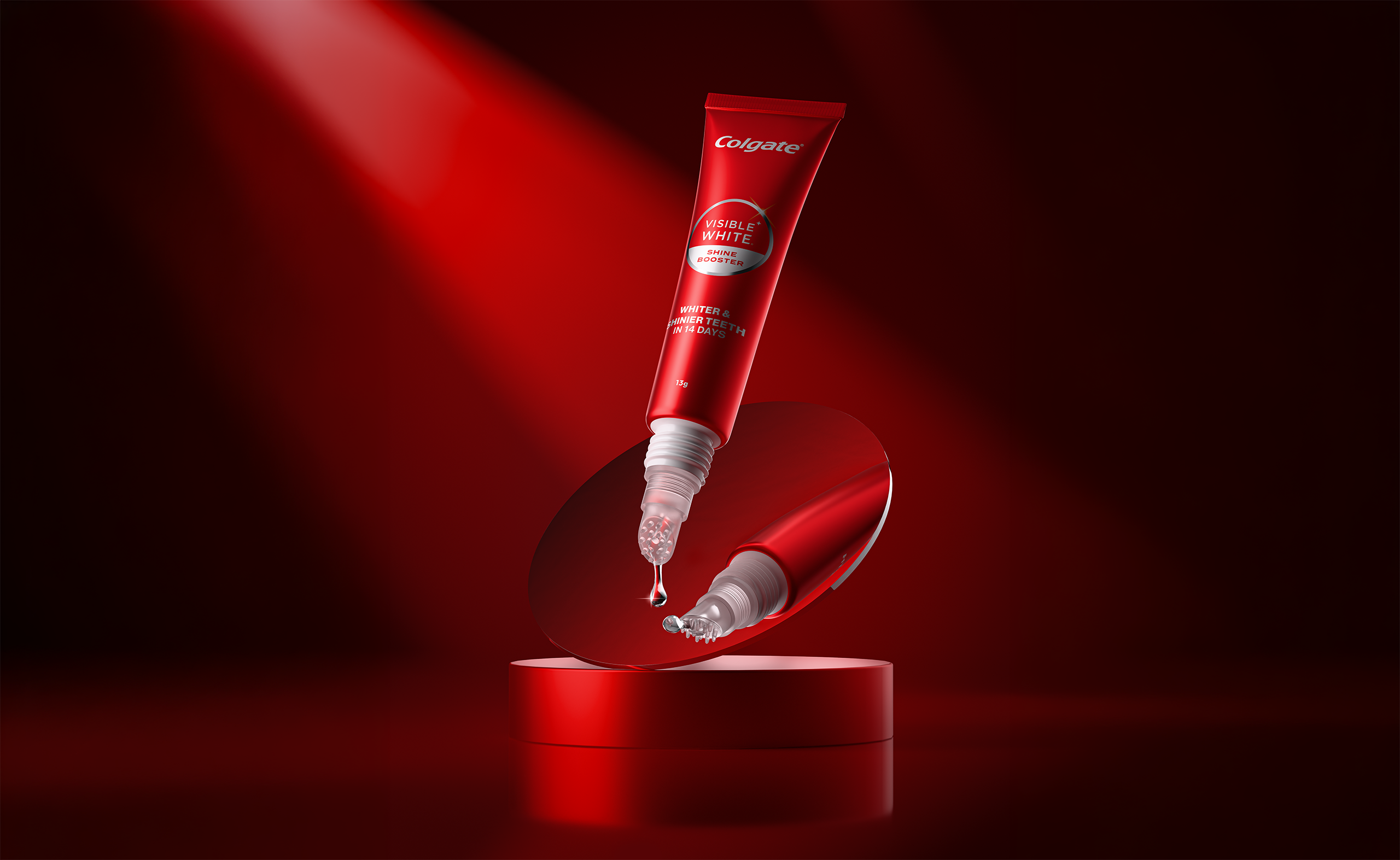
No surface is ever just “plastic.” A whitening tube is glossy lacquer that creases where it’s squeezed; the gel inside is translucent, holding light in its body; the carton is coated board that wears light at its corners. We rebuild each material in Blender the way it behaves under studio light — roughness, bump, translucency — until it stops reading as CG.

03
Light it like a shoot
Then we do what a photographer would do — and the shoot changes with the brand. Optic White gets a single hard spotlight cutting through a red room; Zeeyo gets the even, unhurried daylight of a gallery plinth. Different moods, same discipline: real focal lengths, real f-stops, lights with size and falloff. Digital light obeys studio logic — it just never needs to be rented twice.
The last step is the honest one: grain, a whisper of aberration, the five percent of imperfection that sells the rest. Drag the slider below to see where it started — and how far a gray box can go.
On the left of the handle, the working Blender scene; on the right, the finished key visual. Same file, a few hundred decisions apart.
Aether NY · New York